Watercolor Bakery Clipart: A Designer's Review
When I first opened the folder for Watercolor Bakery Clipart. Baking Tools, my immediate reaction wasn't just about the aesthetic; it was about feasibility. As a designer who spends half their life troubleshooting digitized files and the other half managing client expectations, I look at Illustrations differently than a graphic designer might. I see potential stitch paths, density issues, and fabric interactions before I even see the final image. This collection promises a soft, artistic vibe that is incredibly popular right now, but translating that watercolor bleed into thread requires a critical eye.
The Visual Mood and Stitching Potential
The first thing that stands out is the mood. These aren't rigid, vector-sharp icons; they possess a fluidity that mimics actual paint on paper. For an embroidery project, this suggests a need for careful handling of fill stitch directions and stitch density. If the original artwork relies heavily on gradients and soft edges, the resulting machine embroidery design must use varied thread angles to replicate that depth without looking blocky.
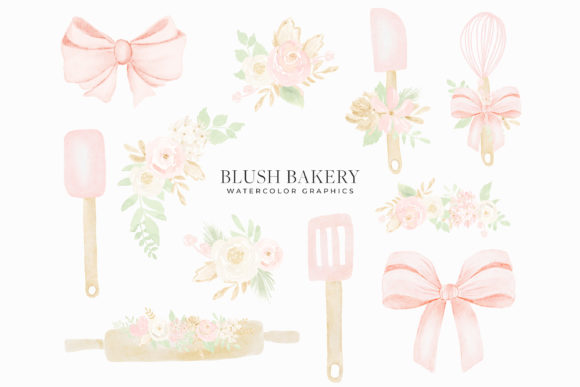
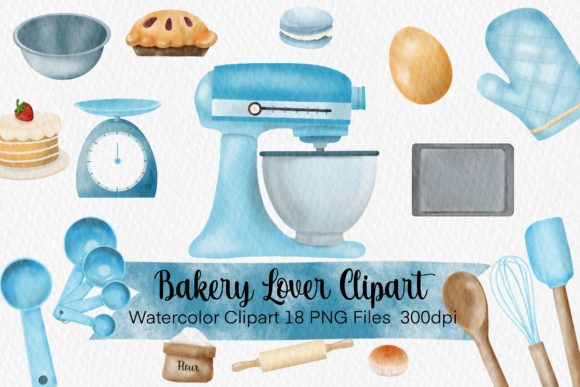
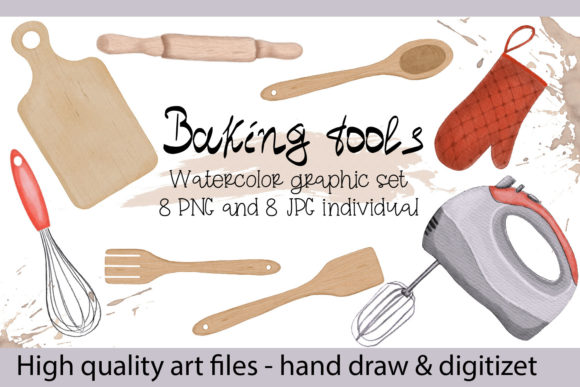
In terms of layout, the tools depicted—whisks, rolling pins, spatulas, and mixing bowls—are arranged with a casual, organic feel. This is excellent for custom apparel where a stiff, centered logo feels too corporate. The visual personality here screams "boutique bakery" or "cozy home kitchen." It feels approachable and handmade, which is exactly what modern consumers are looking for in a handmade product. However, the lack of heavy outlining in the source art means the digitizer (or you, if you are editing the embroidery file) needs to ensure there is enough contrast between elements so they don't merge into a muddy blob once stitched.
Real-World Application: The Boutique Apron Scenario
Let's walk through a realistic scenario. Imagine a client runs a small artisanal bread shop and wants branded aprons for their staff, along with retail tea towels for holiday sales. They choose Watercolor Bakery Clipart. Baking Tools because it matches their packaging aesthetic.
For the aprons, likely made of a sturdy cotton twill, this design would shine. The texture of the twill can support a moderate stitch density, allowing the soft colors of the watercolor style to pop. I would recommend using a satin stitch for the outlines of the tools to give them definition against the fabric, while using lighter fill densities for the interior to maintain that airy, painted look. On a tea towel, which is often thinner linen or cotton, the approach changes. You would need a high-quality cut-away stabilizer to prevent the fabric from puckering under the weight of the thread, especially if the design covers a larger area.
Customers reacting to the finished product would likely perceive higher value. Unlike a standard, flat logo, this style suggests effort and artistry. It elevates a simple kitchen towel into a personalized gift worthy of gifting. For an Etsy seller, listing items featuring this design could command a higher price point because the visual complexity implies a custom, high-end creation rather than a mass-produced item.
Fabric Considerations and Technical Challenges
While the aesthetic is charming, we must address where Watercolor Bakery Clipart. Baking Tools might struggle. Watercolor effects often rely on subtle color shifts. In embroidery, we are limited by the number of thread colors we can practically use without making the production time unsustainable. If the design relies on ten shades of blue to create a gradient, you need to verify if the digital embroidery file simplifies this effectively. Too many color stops can frustrate the machine operator and increase the risk of errors.
Texture is another factor. On a fluffy sweatshirt embroidery project, fine details can get lost. If these baking tools have tiny handles or delicate whisk wires, they might disappear into the fleece pile. In such cases, adding a backing layer or choosing a simpler version of the design is crucial. Similarly, for baby embroidery on onesies, the fabric is stretchy and thin. A dense watercolor-style fill could make the garment stiff and uncomfortable against sensitive skin. Here, a lighter running stitch outline or an applique design approach might be superior to a full fill.
Curved surfaces present their own hurdles. If you plan to put this on a cap or hat, the center of the design needs to be compact. Wide, sprawling watercolor splashes can distort over the front panel curve. Always check the hoop size compatibility; if the design is wide, ensure your machine's hoop can accommodate it without excessive re-hooping, which risks misalignment.
Enhancing Brand Value and Customer Trust
Using distinct, high-quality assets like Watercolor Bakery Clipart. Baking Tools directly impacts brand consistency. For a craft business, presenting a cohesive visual language across tote bag design, patches, and digital mockups builds recognition. When a customer sees the same soft, artistic style on your Instagram, your website, and the physical product they receive, it reinforces professionalism.
This consistency fosters trust. Buyers of small shop products are often looking for authenticity. A generic clipart look can feel cheap, but a well-executed watercolor style feels curated. It tells the customer that the maker cares about the details. Whether it's for holiday embroidery gifts or everyday commercial embroidery runs, the perceived quality of the design translates to the perceived quality of the business.
Practical Notes for the Embroidery Designer
Before committing this design to a client's order, there are several steps I strictly follow. First, always test the design on scrap fabric that matches the final material. What looks good on a screen might behave differently on canvas versus jersey knit. Check the thread color contrast specifically; watercolor designs can sometimes look washed out if the threads are too similar in tone.
Review the stitch density settings in your software. If the design feels too heavy, reduce the fill percentage slightly to let the fabric breathe. Confirm the hoop size requirements early to avoid last-minute scrambling. Inspect small details closely—are those tiny flour specks actually stitchable, or will they just be loose threads? It is also wise to view the design in a black-and-white mockup to ensure the shapes hold up without relying on color for definition.
Finally, and perhaps most importantly, verify the licensing terms. Just because a file is labeled as an Illustrations pack doesn't automatically grant commercial rights for every use case. Ensure you are cleared to sell finished products or printable mockups if that is part of your business model. Never assume; always read the specific license included with the design assets.
In conclusion, Watercolor Bakery Clipart. Baking Tools offers a delightful, versatile foundation for a wide range of projects. With the right technical adjustments regarding stabilizer, density, and fabric choice, it can transform simple goods into cherished keepsakes. It is a reminder that in our trade, the beauty of the final stitch lies in the preparation before the needle ever hits the fabric.