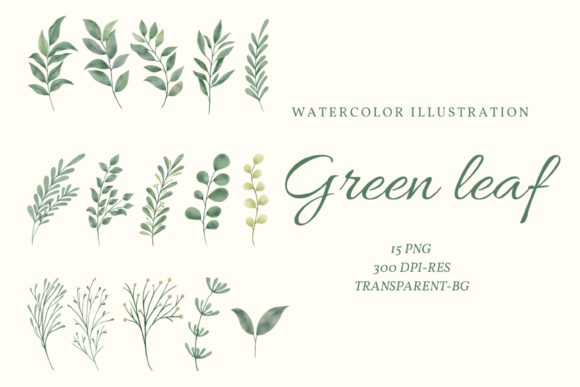
Watercolor Green Leaf Clipart for Illustrations
As a brand designer who has spent the last decade helping local businesses find their visual voice, I approach every new graphic design asset with a critical eye. It is not enough for an image to be pretty; it must serve a strategic purpose within a broader brand identity. Recently, I evaluated the Watercolor Green Leaf Clipart collection for a potential project involving a boutique skincare line and a local artisanal bakery. My goal was to determine if these illustrations could elevate physical products and digital presence simultaneously. The first impression is one of organic warmth. Unlike rigid vector shapes or flat icons, these watercolor elements possess a softness that immediately suggests a handmade, approachable, and premium quality. They evoke a mood of freshness and natural integrity, making them an ideal fit for businesses that want to communicate transparency and care.
Defining Brand Personality Through Organic Textures
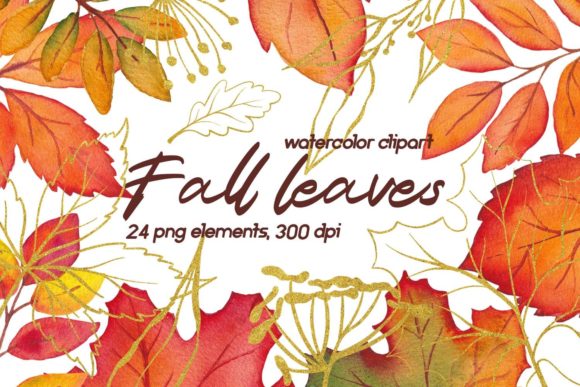
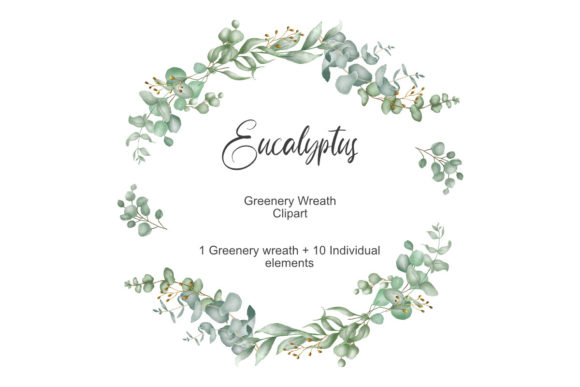
The specific style of this Watercolor Green Leaf Clipart leans heavily into the rustic yet elegant aesthetic. For a local business, especially in the food or wellness sectors, this is invaluable. When a customer picks up a product, the texture of the artwork subconsciously signals how the product was made. These leaves do not scream "mass-produced"; they whisper "crafted with attention." This makes them perfect for a handmade business selling soaps, candles, or small-batch jams. The varying shades of green provide depth without overwhelming the design, allowing the brand's primary colors to shine while adding necessary decorative flair. Whether the brand personality is feminine, earthy, or simply friendly, these assets adapt well, provided they are used with intention.
Strategic Applications in Packaging and Print
In the realm of packaging design, versatility is key. I envision using these leaf motifs as corner accents on product labels to frame the logo, creating a natural border that draws the eye inward. For a coffee shop, these could adorn menu boards or price lists, breaking up text-heavy layouts with breathing room. In a retail setting, hang tags and thank-you cards benefit immensely from this level of detail; a simple card becomes a keepsake when stamped with a delicate watercolor leaf. Furthermore, for seasonal campaigns, such as a spring collection or a holiday gift set, these illustrations can be scaled and rotated to create patterned backgrounds for wrapping paper or shopping bags. The key is to use them to enhance the visual hierarchy, guiding the customer's gaze to the most important information, such as the product name or key ingredients.
Elevating Digital Presence and Social Media
Beyond physical goods, the utility of this Watercolor Green Leaf Clipart extends seamlessly into social media graphics and web design. For a social media manager, these assets offer a quick way to maintain consistency across posts. They work beautifully as overlays on product photography or as decorative bullets in educational carousels. When designing a website banner, placing these leaves in the negative space can soften the interface, making the user experience feel more inviting. For marketing visuals used in paid ads, the organic nature of the watercolor style often performs better than sterile stock photography because it feels more authentic to the viewer. It helps build a cohesive narrative where the digital storefront feels like an extension of the physical shop.
Where Caution is Required in Design Execution
However, no design asset is a universal solution. There are scenarios where the Watercolor Green Leaf Clipart should be used sparingly or avoided entirely. For formal corporate branding or industries requiring strict regulatory compliance, such as pharmaceuticals or high-finance, the loose nature of watercolor may appear too casual. Additionally, one must be careful when applying these to very small labels, such as those on essential oil bottles or lip balms. The fine details of the watercolor bleed can get lost or muddy when printed at a tiny scale. It is also crucial to avoid placing these decorations over ingredient lists or legal disclaimers, as they can reduce readability and create visual clutter. For luxury minimalist brands that rely on stark whitespace and sharp typography, these decorative elements might compete rather than complement, detracting from the desired sleek aesthetic.
Practical Notes for Professional Implementation
Before integrating any design assets into a client project, I follow a rigorous testing protocol. First, I test the Watercolor Green Leaf Clipart on real product mockups to see how the colors interact with different packaging materials, such as kraft paper versus glossy plastic. It is essential to check how the image renders in black and white, as many local businesses still rely on monochrome printing for cost efficiency. I also preview the assets on small-scale prints to ensure the resolution holds up and the PNG transparency is clean, without any unwanted white halos around the edges. Typography pairing is another critical step; these leaves tend to pair wonderfully with serif fonts for a classic look, script fonts for a personal touch, and clean sans-serif fonts for a modern contrast. Finally, and perhaps most importantly, always confirm the commercial license. Ensuring you have the rights to use these illustrations for commercial design and physical product sales protects both the designer and the business owner from legal complications down the line.
Ultimately, the value of the Watercolor Green Leaf Clipart lies in its ability to humanize a brand. In a market saturated with digital perfection, the imperfect, fluid lines of watercolor offer a connection that customers crave. When used correctly, it transforms a simple label into a story, a flyer into an invitation, and a logo into a symbol of trust. For the creative entrepreneur willing to invest time in thoughtful application, this asset is a powerful tool for building a memorable and beloved local brand.